Jūrokugiku— Japanese Family Crest (Kamon)
 test.shodocafe7557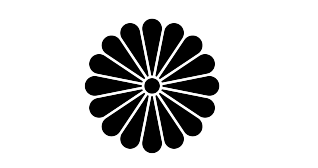
Overview
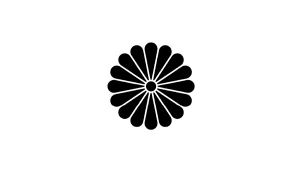
Jūrokugiku refers to a traditional chrysanthemum-based Japanese family crest (kamon) featuring sixteen petals arranged in perfect radial symmetry.The chrysanthemum is one of Japan’s most revered symbols, long associated with dignity, refinement, and longevity.It is important to note that only the double-layered sixteen-petal chrysanthemum (jūroku-giku yae) is the official emblem of the Japanese Imperial Family.Single-layer sixteen-petal designs, like the one shown here, are historically inspired forms that were widely used outside the Imperial Household.
Historical Significance
The chrysanthemum crest was first adopted by Emperor Go-Toba during the Kamakura period as a personal emblem.
Over time, the double-layered sixteen-petal chrysanthemum became exclusively associated with the Imperial Family, and its use was formally restricted.However, single-layer sixteen-petal chrysanthemum motifs were adopted by samurai families, shrines, and cultural institutions seeking auspicious symbolism and a connection to Imperial culture.However, single-layer sixteen-petal chrysanthemum motifs were adopted by samurai families, shrines, and cultural institutions seeking auspicious symbolism and a connection to Imperial culture.The chrysanthemum itself was introduced to Japan from China, where it symbolized immortality and prosperity.
Symbolism
The chrysanthemum represents longevity, renewal, and purity.
Its sixteen evenly spaced petals symbolize harmony, balance, and moral clarity, while the perfectly symmetrical form conveys stability and refined character.
Modern Usage
TToday, the double-layer sixteen-petal chrysanthemum remains the official emblem of the Japanese Imperial Family and appears on passports, government documents, and ceremonial objects.Single-layer sixteen-petal chrysanthemum designs continue to be used in traditional crafts, decorative arts, and contemporary cultural products as historically inspired kamon motifs.
- What does the Sixteen-Petal Chrysanthemum crest symbolise?
-
It represents longevity, purity, harmony, and noble refinement.The chrysanthemum blooms late into autumn, outlasting other flowers.
- Is this crest linked to the Imperial family?
-
Yes, in origin. The Imperial Family uses the double-layer sixteen-petal chrysanthemum (jūroku-giku yae).
Single-layer variants were historically used by samurai families and shrines and are considered legitimate, non-Imperial designs.
- Can I add the Juroku-giku crest to a tote bag at Shodocafe7557?
-
Yes.
Customizable Tote Bag with Japanese Family Crests (Kamon) and Kanji
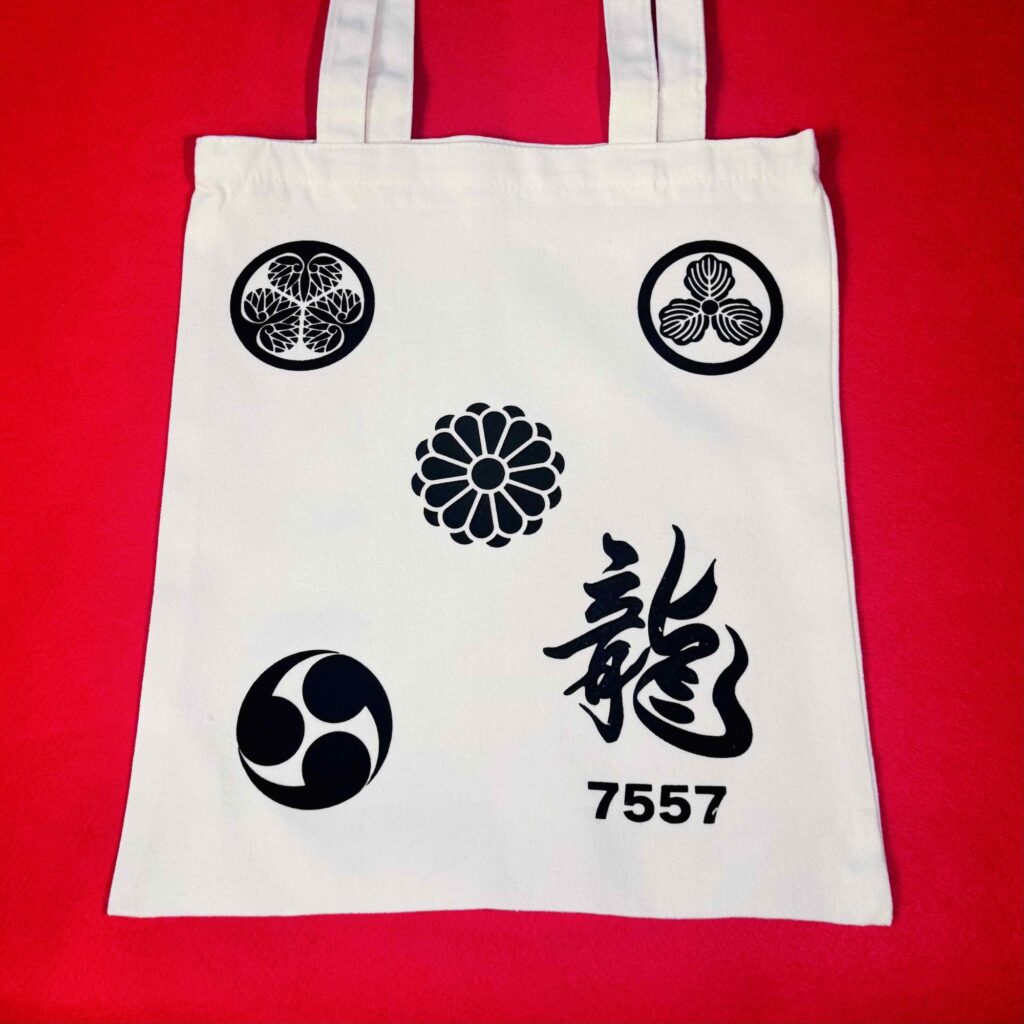
We sell customizable tote bags featuring Japanese family crests (kamon) and kanji. Choose your favorite crest and characters—such as ‘龍’—and we’ll craft a unique, made-in-Tokyo piece. Perfect as a cultural gift or travel keepsake. Lead time varies by design.
Want to explore more Japanese family crests?
Check out the links below to learn about the meanings and origins of other representative kamon.
We also offer custom tote bags featuring your favorite crest—feel free to contact us for orders or inquiries!
Which is your favorite family crest?
Japanese family crest